niti.aiSenior Software Engineer
AI-Powered No-Code UI Builder
Helped turn an AI-assisted no-code concept into a usable product, combining visual authoring, cross-platform SDKs, performance work, and stronger engineering practices.
- Timeline
- January 1, 2024 — May 1, 2024
- Primary contribution
- Senior Software Engineer
Implementation
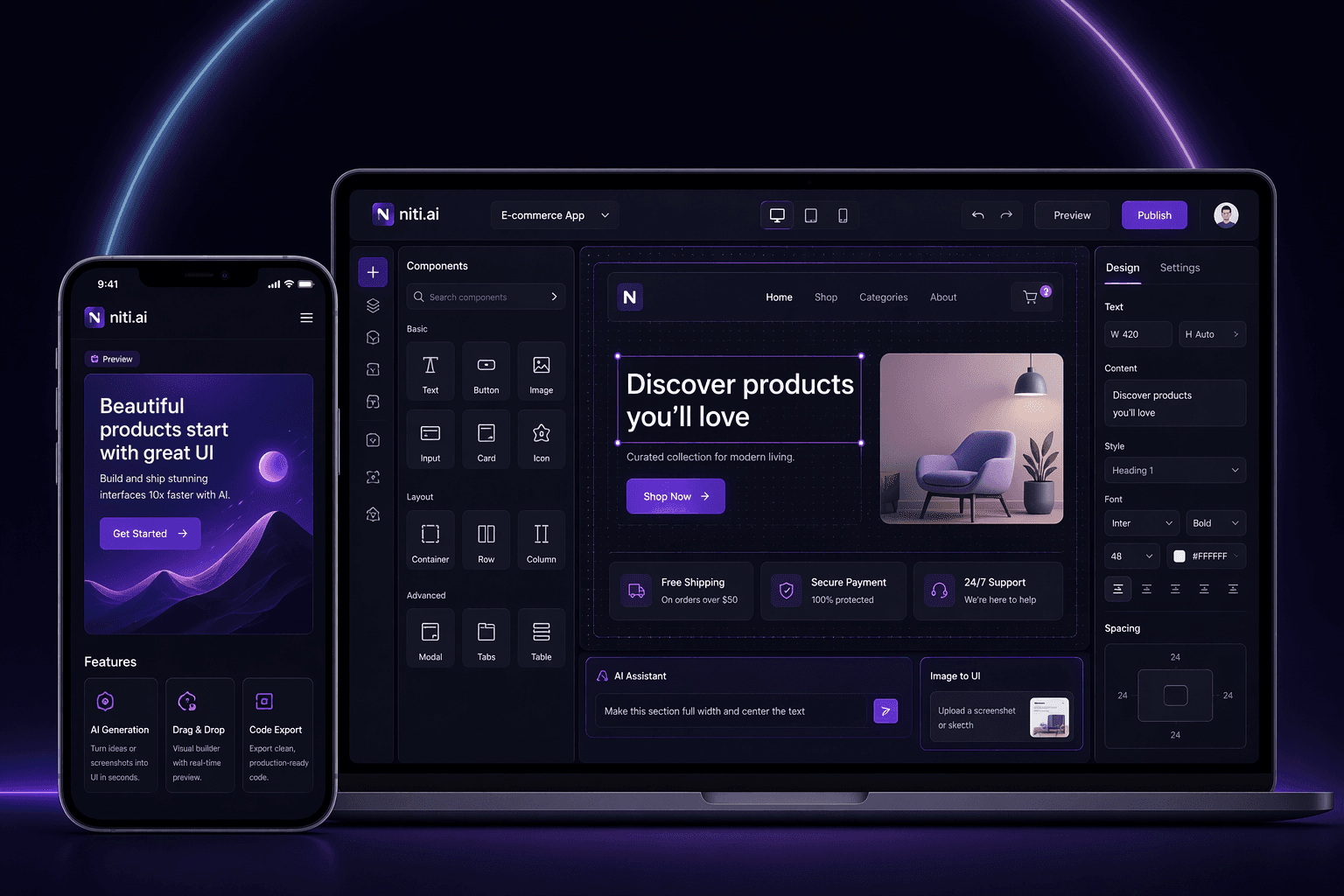
A closer look at the product interface and the implemented experience.
Product challenge
Make interface creation meaningfully faster for both technical and non-technical users. The opportunity was larger than a visual editor: the product needed trustworthy AI assistance, reusable output across web and mobile, and an engineering foundation that could support rapid experimentation without degrading quality.
Product and engineering approach
Build the complete creation loop
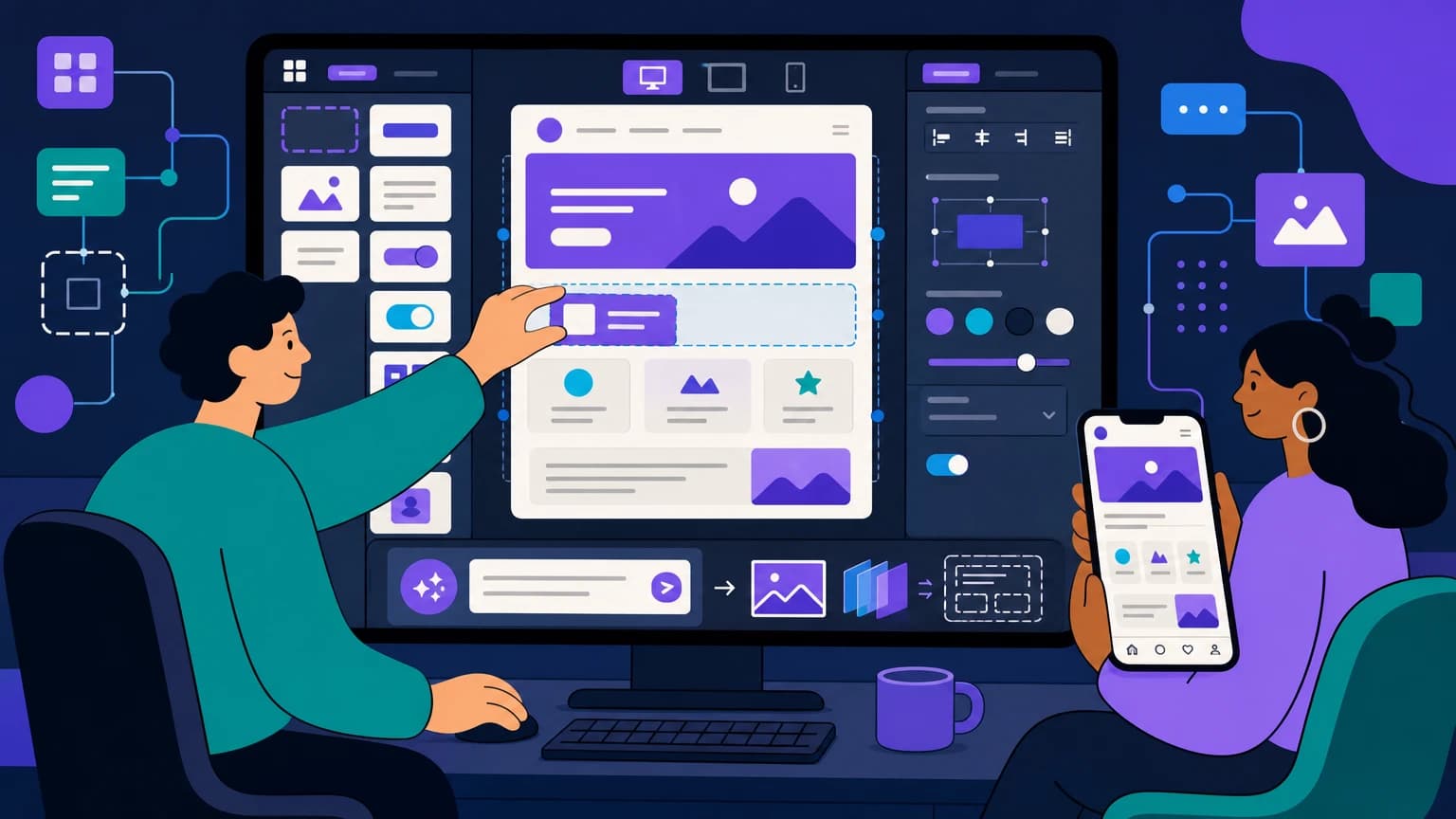
- Developed a modular TypeScript and Next.js editor with responsive previews, drag-and-drop composition, and immediate visual feedback.
- Built Golang services around the performance, concurrency, and data requirements of larger UI projects.
- Delivered Web and Flutter SDKs so the work users created could travel into real products instead of stopping at the authoring surface.
Apply AI to specific user friction
- Co-designed an image-to-UI flow using GPT Vision and screenshot-to-DOM techniques to turn visual references into editable starting points.
- Added conversational adjustments through GPT-3.5 so users could make common layout changes in natural language.
- Iterated on prompts, heuristics, and post-processing based on output quality, reducing manual corrections by about 30% in internal measurement.
Strengthen the system and team
- Introduced coding standards, CI/CD, automated tests, and Sentry-based monitoring so rapid product iteration had dependable guardrails.
- Mentored junior engineers through reviews, pairing, and workshops, helping them take ownership of components and services.
- Led decisions about component reuse, API design, scale, and the trade-offs between performance, delivery speed, and maintainability.
Outcome
- Reduced time to prototype by about 60%, enabling non-technical users to move from an idea to a functional interface with less boilerplate.
- Reduced backend API latency by about 40% through tuning, caching, and more efficient data access.
- Reduced bugs in shipped features by about 25% after introducing delivery, testing, and monitoring practices.
- Shipped differentiated image-to-UI and conversational editing capabilities while building internal knowledge about where generative AI needed deterministic correction and product guardrails.
Technology stack
Linting/Code Quality3
CI/CD2
React
TypeScript
Next.js
Golang
AI/ML
UI/UX
Mentoring
SDKs
Flutter
Sentry
React Flow
GPT Vision
GPT-3.5
Performance Optimization
Flutter SDKs
RESTful APIs
Component-based UI Design
Testing
Logging & Monitoring